What is the Difference Between POP and IMAP?
In this article, you’ll learn the difference between the 2 commonest incoming email protocols,
POP and IMAP.
POP, or Post Office Protocol, was created as simplified thanks to
downloading and delete messages on a foreign email server. The latest
version, POP3, is supported by virtually all email clients and servers.
Using POP, an internet-connected email client accesses a foreign mail
server; downloads all emails to your local computer and marks the
messages for deletion on the e-mail server.
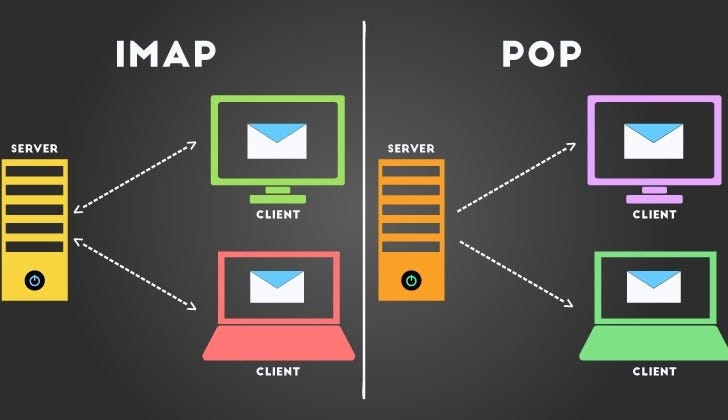
This
means the e-mail messages you retrieve using POP, can only be viewed
within the specific email client, on the precise computer that you
simply downloaded them to. Once downloaded, you can’t access these
messages via web mail or a special email client on another computer.
Think of POP sort of a traditional telephone electronic device that uses
tapes.
Callers can leave a recorded message on the electronic
device, but you’ll only hear the message if you’re physically within the
same room as your electronic device and press play.
Until you erase your messages from the tape, they remain available to replay at any time, but only from that electronic device.
IMAP, or Internet Message Access Protocol,was specifically designed to
free us from the bounds of sending and receiving emails from one email
client. In contrast to POP, IMAP allows you to log into any
internet-connected email client,or a webmail site, and view all of the
equivalent emails at any time. In a constantly connected world,the
ability to send and receive email from both email clients and webmail
sites has made IMAP very fashionable.
With IMAP,your email is stored on your provider’s email servers until you delete it. While this makes email access convenient, some providers limit the quantity of email you’ll store on their servers, and may temporarily suspend email services if you exceed that quantity, Think of IMAP like your remote digital voicemail;when a caller leaves a message using voicemail, their message is kept on a centralized computer data memory device and you access the messages using the touch tones on your telephone or mobile.
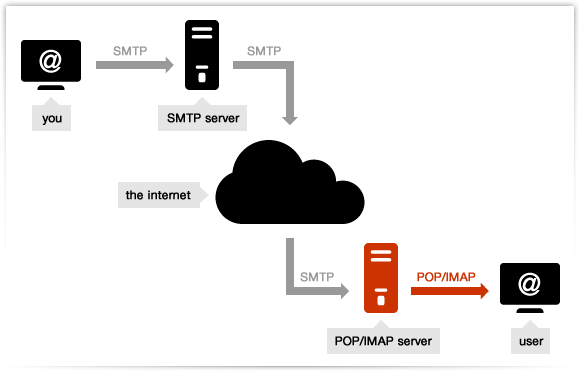
This
digital storage during a centralized location means that you’ll access
and hear voicemails from any telephonic device which will generate touch
tones. Your messages remain on your provider’s data memory device until
you delete them. However, most providers limit the number of messages
you’ll store, and if you exceed this amount callers may temporarily not
be ready to leave you a message.
To decide which can work best for
you, think about how you wish to see your email.If you’re someone who
always checks their email from one location or on just one device POP
will work. However, if you’re someone who checks your email from your
laptop just as frequently as your mobile, and you would like to be ready
to access it regardless of where you’re,then IMAP may be a more
sensible choice. While POP and IMAP aren’t the sole incoming email
server settings, they are the foremost common.


Comments
Post a Comment